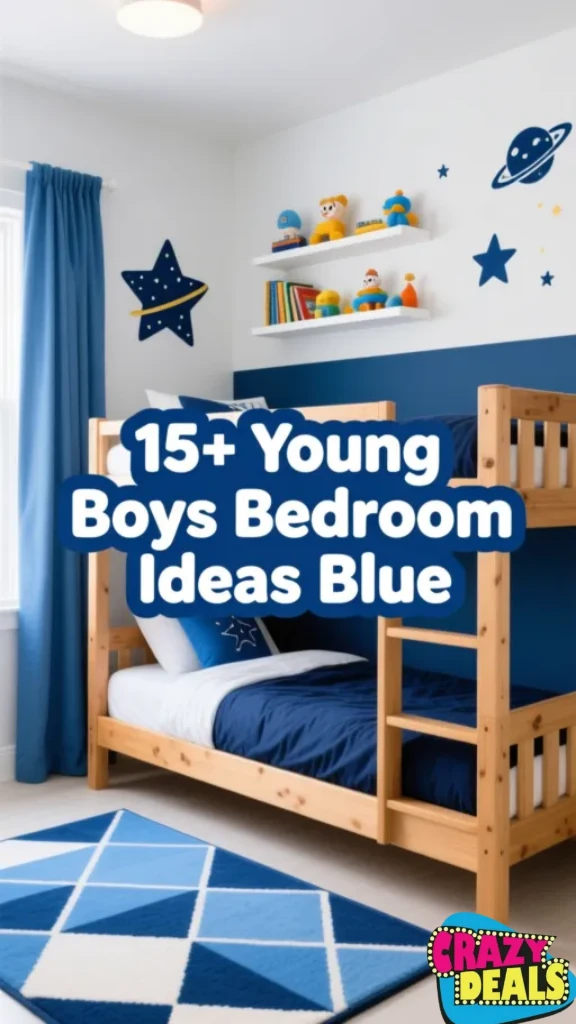
Creating a bedroom space for young boys that’s both functional and fun can feel like solving a puzzle.
Bunk beds aren’t just space-savers—they transform ordinary rooms into adventure zones where imaginations run wild.
I remember when my nephew got his first bunk bed; suddenly, bedtime became the highlight of his day instead of a battle.
Whether you’re working with a small room or designing a shared space for brothers, the right bunk bed setup can make all the difference.
These ideas blend practicality with personality, giving you options that work for real families and real budgets.
1. Nautical Theme With Rope Railings
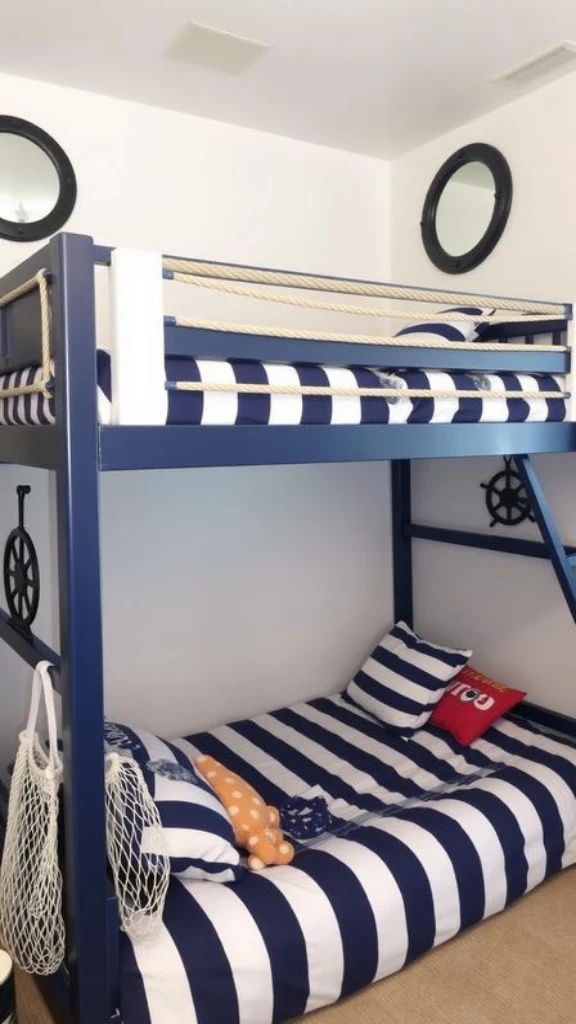
Transform the top bunk into a captain’s deck using rope railings instead of traditional wooden bars. Paint the frame navy blue and white, adding porthole-style mirrors on the walls.
This design works beautifully in coastal-inspired rooms and adds texture that kids love to touch. The rope gives an authentic ship feel while remaining completely safe when properly secured.
Add striped bedding and a ship’s wheel decoration to complete the maritime adventure. Storage nets hung on the side can hold stuffed animals or books. This setup turns bedtime into a voyage across imaginary seas every single night.
2. Built-In Desk Under The Bottom Bunk
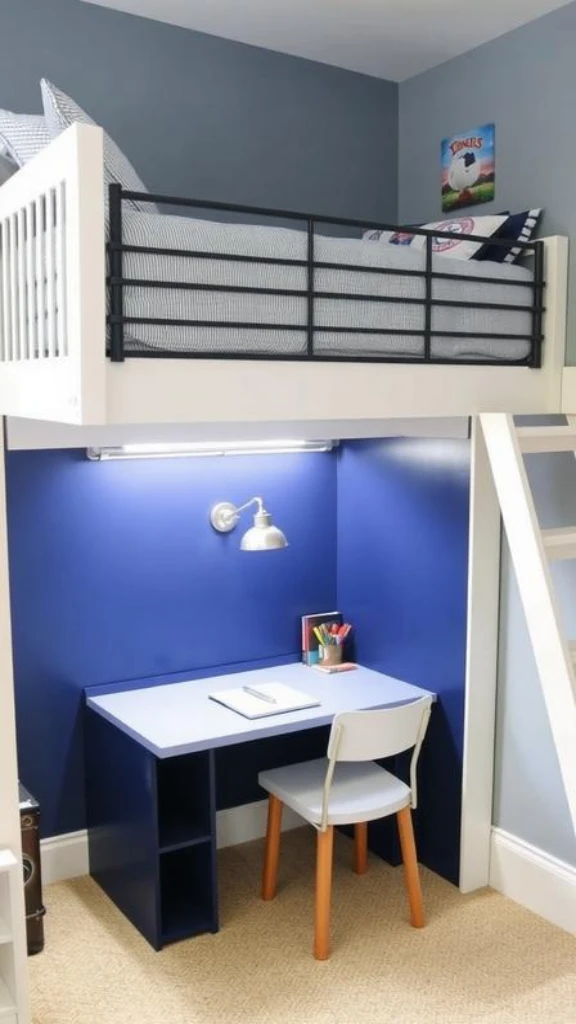
Maximize vertical space by installing a desk directly beneath the top bunk, leaving the bottom area open as a study zone. This arrangement works perfectly for older boys who need homework space but share a room.
Choose a desk with built-in shelving to keep supplies organized and within reach. Good lighting is essential here—add a clip-on lamp or LED strip under the top mattress. The enclosed feeling creates a cozy focus area that minimizes distractions during study time.
Paint the desk area a different color to visually separate work from sleep spaces. This smart solution combines sleeping and learning in one compact footprint.
3. Triple Bunk Configuration For Three Brothers
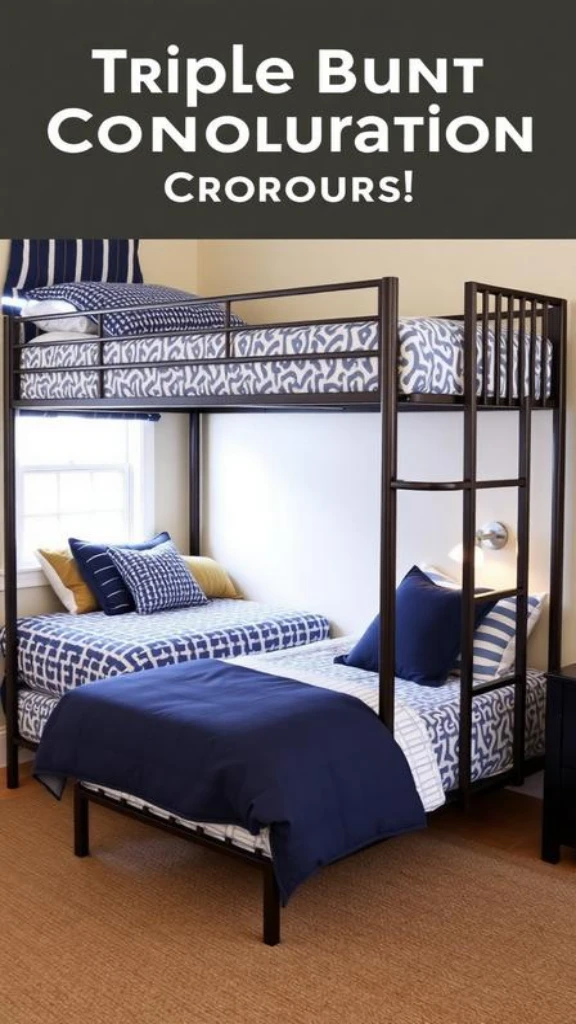
When three boys share one room, a triple bunk design solves the sleeping puzzle without sacrificing floor space. Look for L-shaped or perpendicular configurations that feel less towering than straight-stacked triples.
Safety becomes even more important here—ensure railings are extra sturdy and the ceiling height accommodates comfortable sitting. Each boy can personalize his level with different bedding colors or small shelves for treasures.
The bottom bunk works best for the youngest child for easy access. Add individual reading lights so everyone controls their own space. This setup teaches sharing while giving each child his own defined territory.
4. Industrial Pipe Frame Design
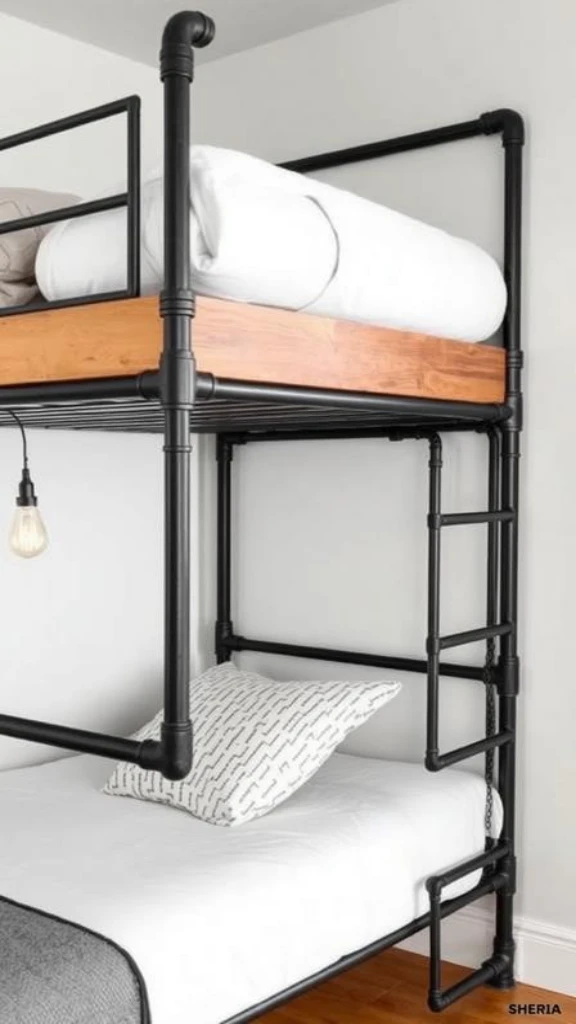
For an edgy, modern look, choose bunk beds constructed from metal pipes and wood planks. The exposed pipe framework creates an urban loft vibe that grows with boys from elementary through teenage years.
These frames often come in neutral grays or blacks that match any color scheme you introduce later. The sturdy construction handles rough play better than some traditional wooden frames. Pair this with Edison bulb lighting and concrete-look accessories for a cohesive industrial theme.
Metal ladders with wide rungs make climbing safer and easier than narrow wooden ones. This style appeals to boys who love construction sites and building projects.
5. Low Bunk Beds For Younger Kids
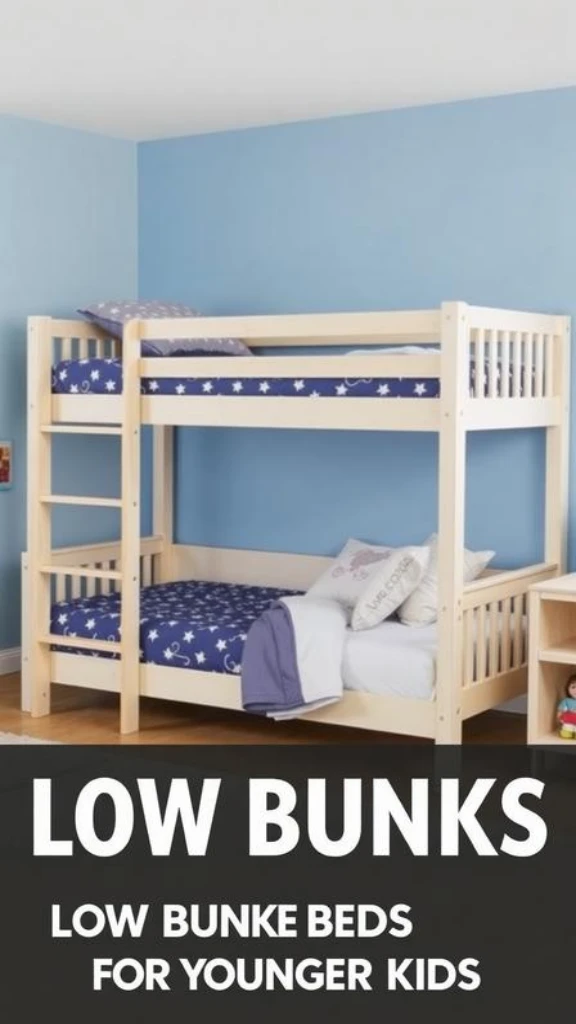
Safety concerns ease considerably with low-profile bunk beds designed specifically for preschool and early elementary ages. These shortened versions sit closer to the ground, reducing fall risks while still providing that exciting bunk bed experience.
The lower height also makes changing sheets far less challenging for parents. Many designs feature angled ladders instead of vertical ones, which small children find easier to navigate. You can still incorporate themes and decorations without the worry that comes with standard-height bunks.
Transitioning from toddler beds to these feels like a natural next step. They buy you several years before upgrading to full-height bunks becomes necessary.
6. Sports Theme With Equipment Storage
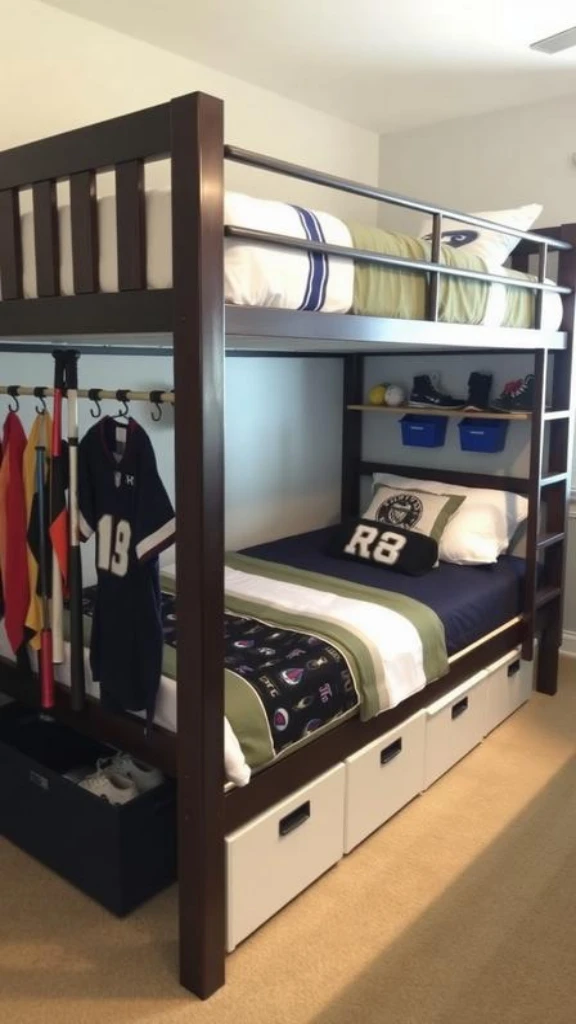
Combine sleeping space with gear organization by choosing bunk beds that include hooks, shelves, and bins for sports equipment. Paint the frame in team colors or add removable decals of favorite sports logos.
Hang hockey sticks, baseball bats, or soccer balls on side-mounted hooks for easy access and display. Under-bed drawers can store uniforms, cleats, and protective gear that otherwise clutter closets.
This design celebrates athletic interests while keeping everything tidy and accessible before early morning practices. Add a small trophy shelf above the desk area to showcase achievements. The room becomes a personal locker room that motivates young athletes daily.
7. Space-Themed Rocket Ship Bunks
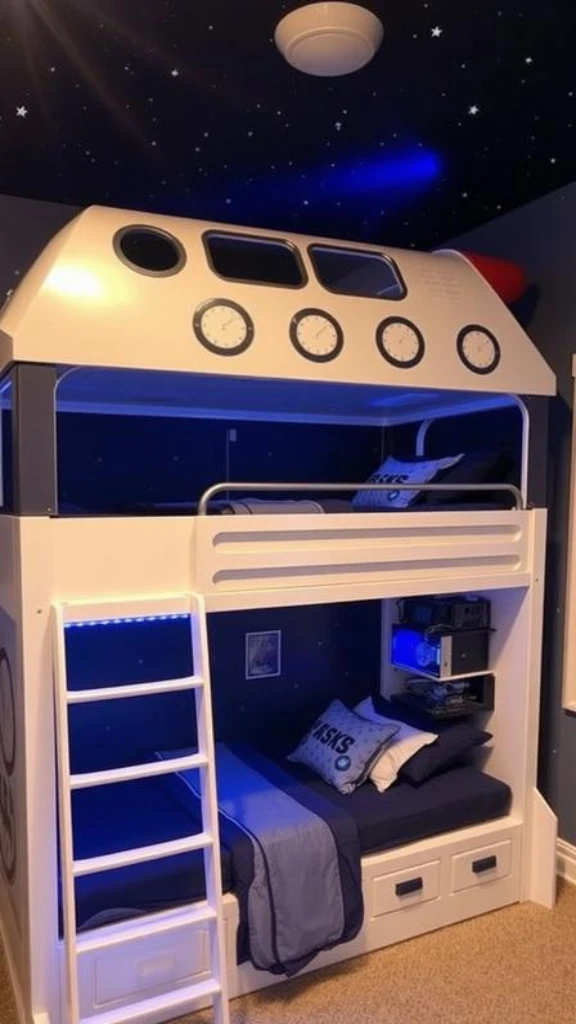
Turn bedtime into a mission to Mars with bunk beds designed like rocket ships. Look for frames with pointed tops, round windows, and control panel decals. Paint the ceiling dark blue with glow-in-the-dark stars for authentic space ambiance.
The top bunk becomes the cockpit, while the bottom serves as the crew quarters. Add LED strips along the ladder to mimic launch lights during nighttime climbs. Storage compartments can be labeled as “cargo holds” for toys and books.
This immersive theme sparks interest in science and exploration while making bedtime genuinely exciting. Every night becomes a countdown to adventure instead of arguments about sleep schedules.
8. L-Shaped Corner Bunk Arrangement
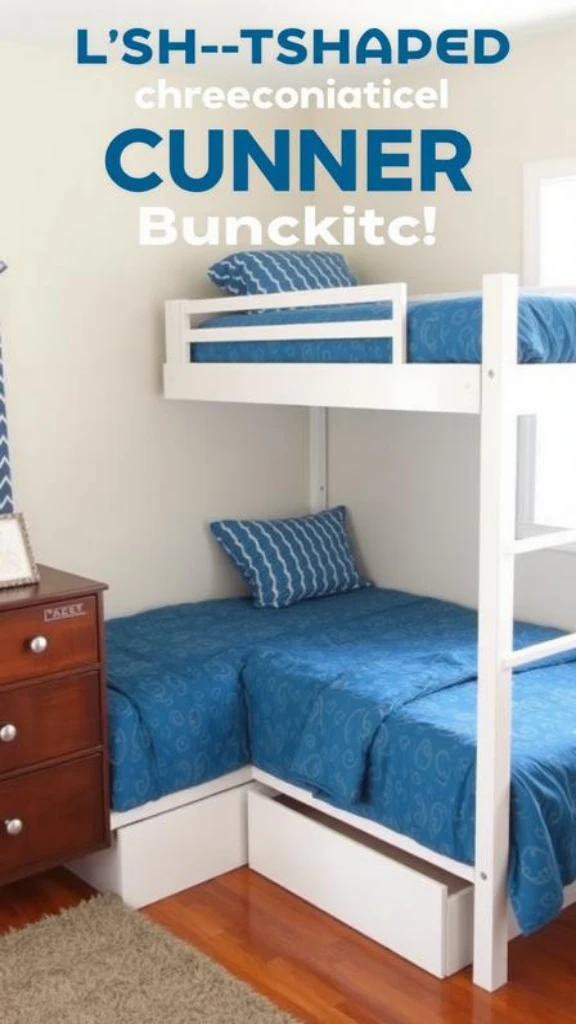
Utilize corner spaces efficiently with L-shaped bunk configurations that create interesting room layouts. This design opens up the center floor area for play while tucking sleeping zones into the corners.
The perpendicular arrangement often feels less cramped than parallel bunks in narrow rooms. Many L-shaped bunks include a third pullout trundle for sleepovers without requiring permanent floor space.
Corner placement also creates natural divisions in shared rooms, giving each child some privacy. Add curtains on one or both bunks for reading nooks or quiet time retreats. This layout works especially well in square-shaped bedrooms where traditional furniture placement feels awkward.
9. Treehouse-Style With Wooden Accents
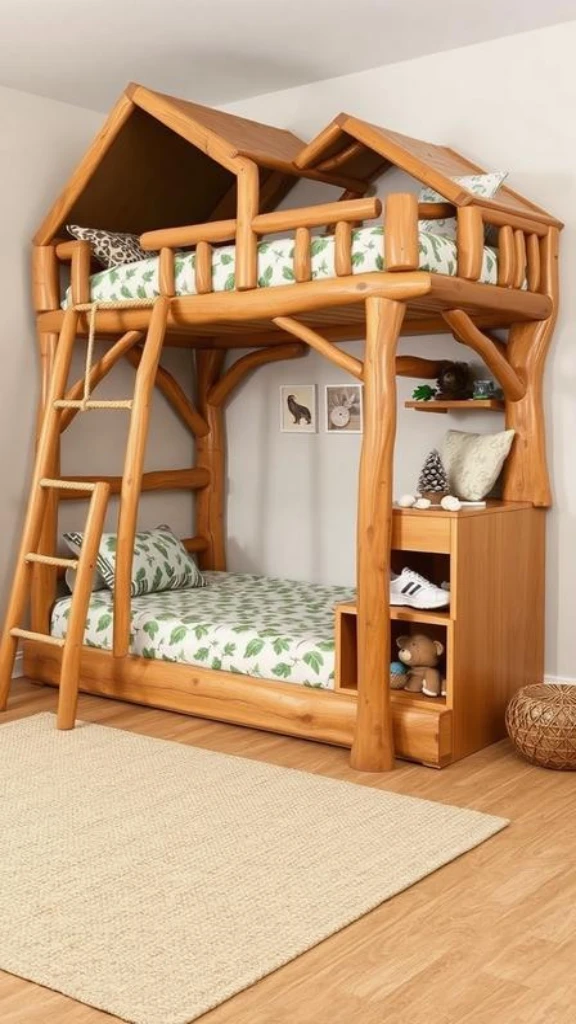
Bring outdoor adventure indoors with treehouse-inspired bunk beds featuring natural wood tones and branch-like details. Look for frames with irregular shapes that mimic tree structures rather than perfect rectangles.
Add leaf-patterned bedding and forest animal decorations to complete the woodland theme. Rope ladders instead of traditional steps enhance the climbing-a-tree feeling. The rustic aesthetic works beautifully in rooms with neutral walls and natural fiber rugs.
Small shelves can hold nature collections like rocks, pinecones, and feathers found on real outdoor adventures. This design encourages appreciation for nature while creating a cozy hideaway feeling indoors.
10. Convertible Bunk With Guest Options
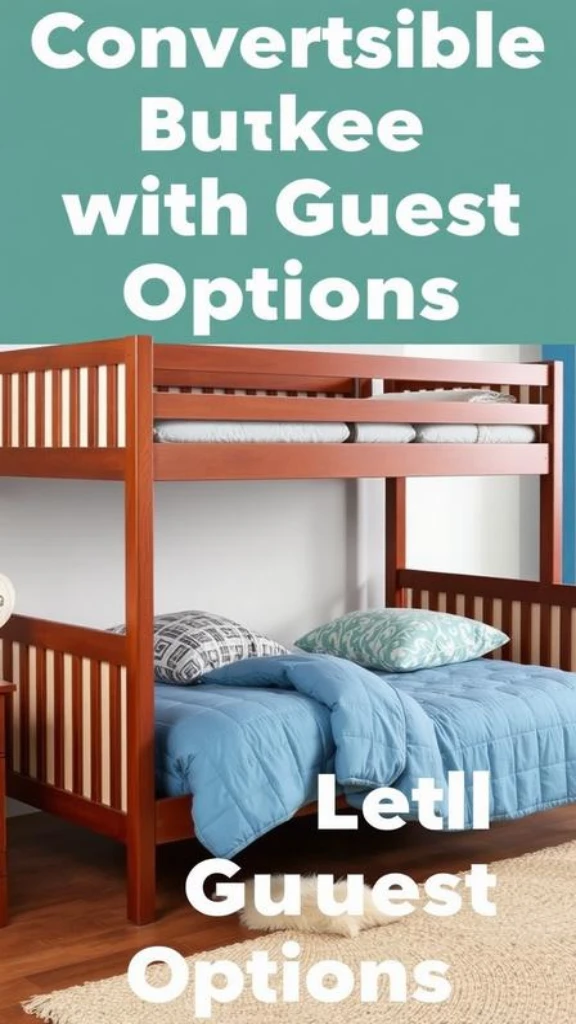
Invest in bunk beds that separate into two individual twin beds when needed, providing long-term flexibility. This feature proves invaluable as kids grow and room arrangements change over the years.
The convertibility means you’re not stuck with bunks if one child moves to another bedroom eventually. During sleepovers, the beds can be separated to accommodate more friends on the floor between them.
Look for designs where both beds have proper headboards and footboards for standalone use. This practical approach costs more initially but saves money by eliminating future furniture purchases. The adaptability makes this choice smart for growing families with changing needs.
11. Bunk Bed With Built-In Storage Stairs
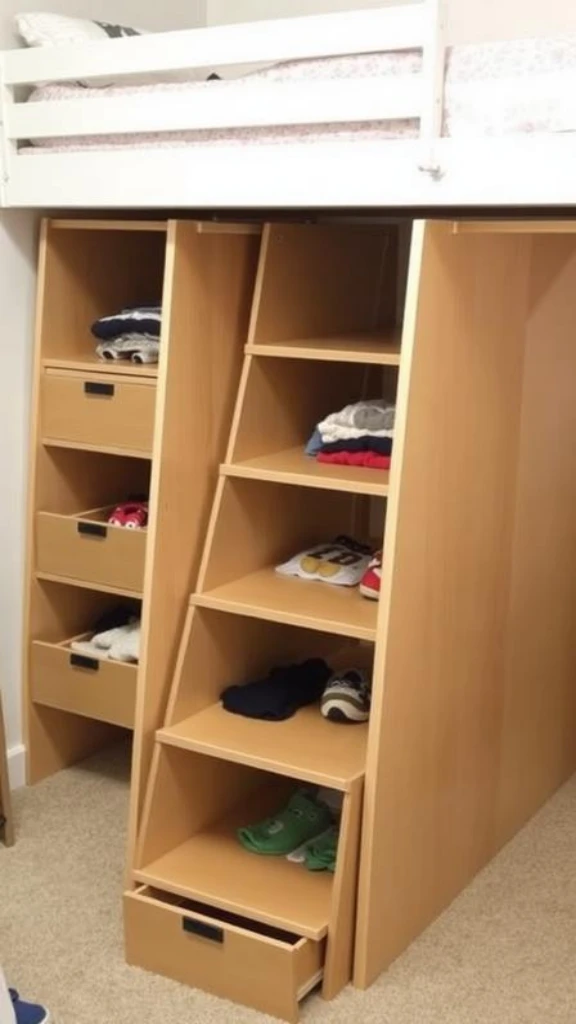
Replace traditional ladders with staircase designs that double as storage drawers for clothes, toys, and books. Each step opens to reveal a compartment, maximizing every inch of vertical space. Stairs feel safer than ladders, especially for younger children or nighttime bathroom trips.
The wider steps also prevent toe-stubbing accidents common with narrow ladder rungs. Organize the drawers by category—pajamas in the bottom, school supplies in the middle, toys on top.
This design eliminates the need for separate dressers in small rooms. Parents appreciate how it teaches organization, while kids love having secret storage compartments for treasures.
12. Race Car Themed With Checkered Flags
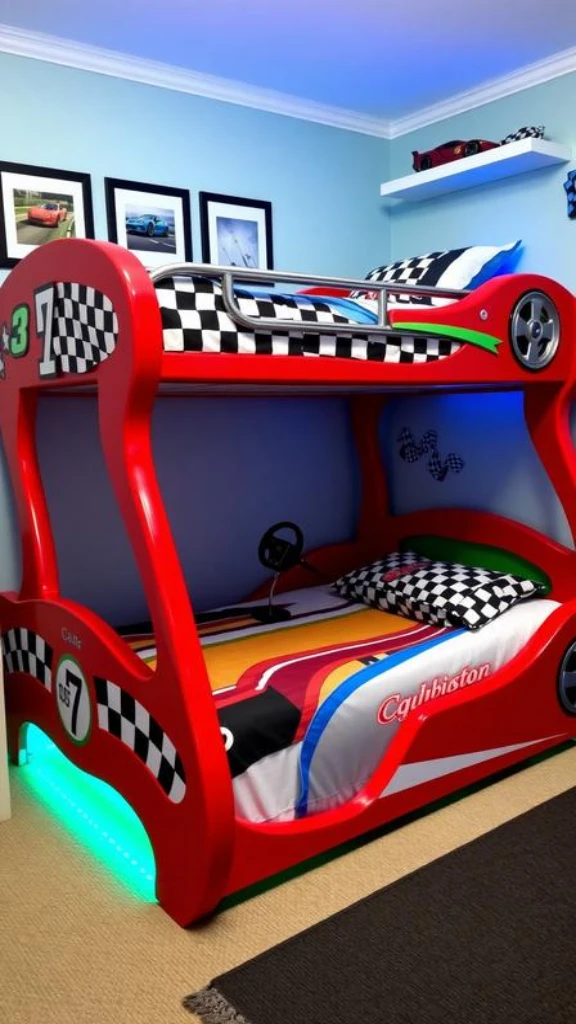
Speed into dreamland with race car-themed bunk beds featuring sleek curves and racing stripes. Paint the frame in bright red, blue, or green with contrasting checkered flag patterns.
Wheel-shaped decorations on the sides and a steering wheel mounted near the pillow add authentic details. Number decals let each child claim their bed as “Car 7” or “Car 3” for personalization.
Hang racing posters and display model cars on floating shelves around the room. LED underglow lights create the effect of a lit racetrack at night. This high-energy theme suits boys obsessed with speed, competition, and everything automotive.
13. Minimalist White Bunk With Pops Of Color
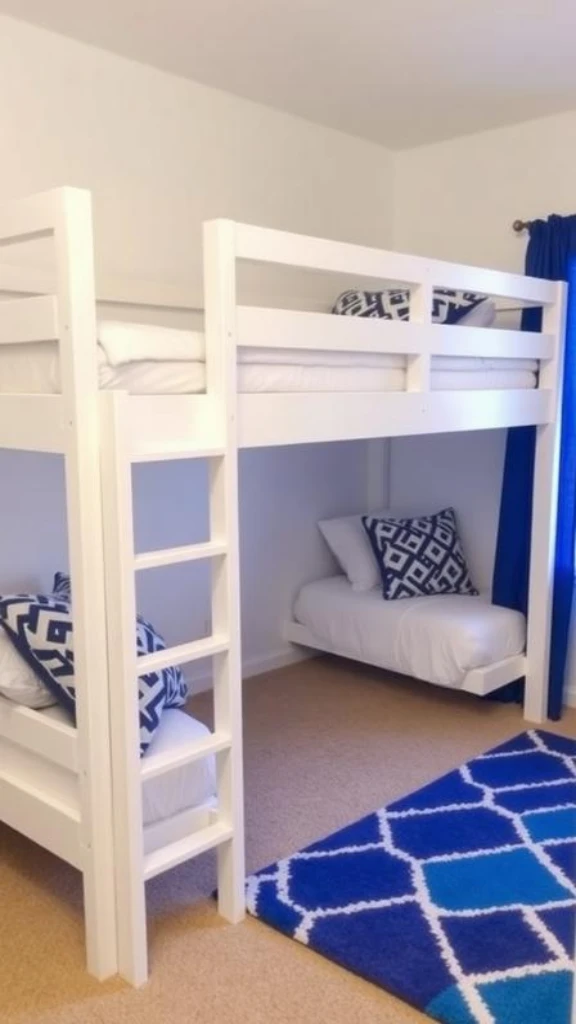
Sometimes simple is best—choose clean white bunk beds that serve as a neutral canvas for colorful accessories. This approach lets you change themes easily by swapping bedding, pillows, and wall art without replacing furniture.
White frames brighten small rooms and pair well with any paint color you choose later. Add personality through bold geometric rugs, vibrant curtains, or neon signs. The minimalist structure appeals to modern design sensibilities while remaining kid-friendly and functional.
As boys grow and tastes change, you can mature the room’s look without starting from scratch. This timeless choice adapts to every age and interest phase throughout childhood.
14. Fort-Style With Curtain Privacy
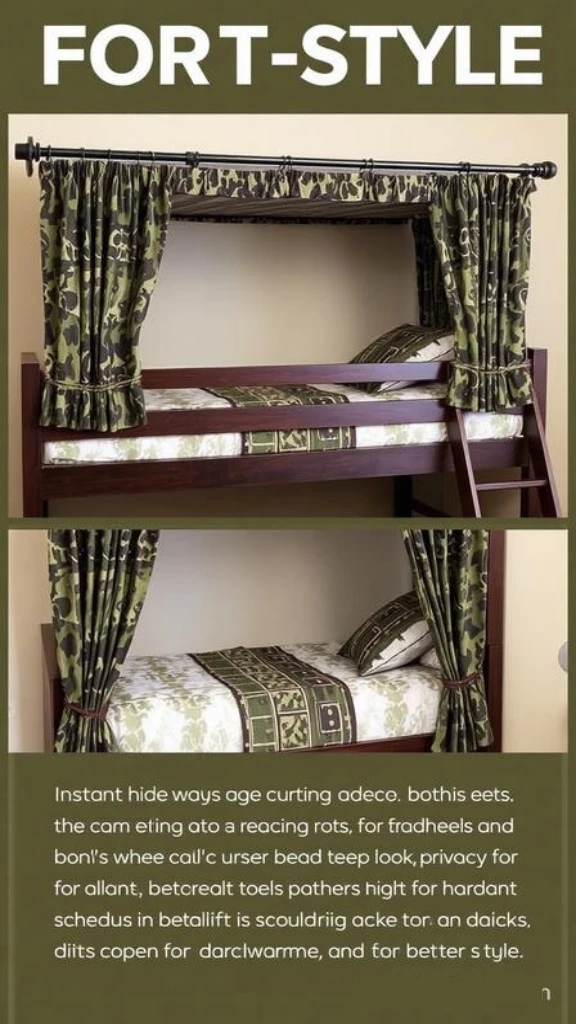
Create instant hideaways by adding curtain rods and fabric panels around one or both bunks. This simple addition transforms sleeping areas into personal forts where kids can read, play, or decompress alone.
Choose fabric patterns that match room themes—camouflage for military styles, solid colors for modern looks. The curtains provide privacy in shared rooms, helping brothers respect each other’s space.
They also block light for different sleep schedules or create darkness for better naps. Installation takes minutes with basic curtain rod hardware and doesn’t damage the bed frame. Kids can open and close their fort walls depending on mood and activity.
15. Loft Bunk With Play Area Underneath
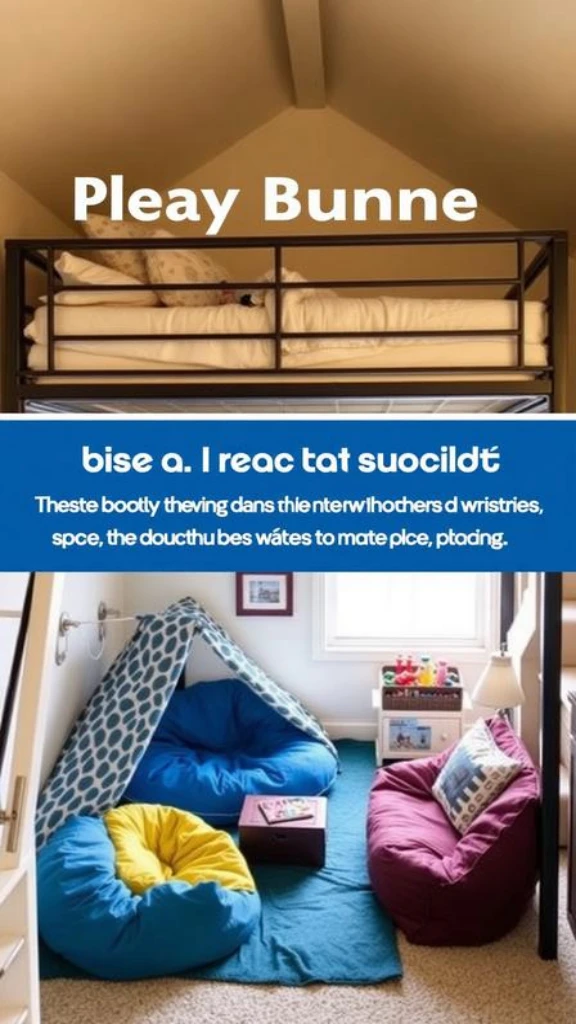
Elevate a single bed high enough to create a complete play zone underneath instead of a second sleeping spot. This works perfectly for single children or when siblings have separate rooms but need maximum floor space.
The underneath area can become anything—a reading nook, Lego building station, or cozy tent setup. Add bean bags, a small table, and storage bins to define the play space clearly. The raised sleeping area makes bedtime feel special while freeing up valuable square footage during waking hours.
Choose frames with sturdy support beams that can handle the weight of both sleeping and playing. This design essentially creates two rooms in the vertical space of one.
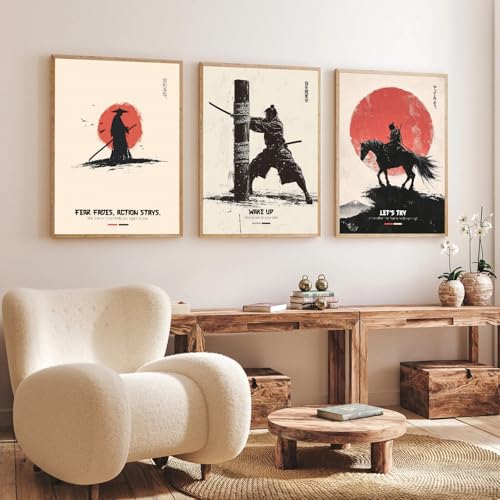
- Frame Size: 13 X 19 Inch , Beige Frame Border, Acrylic Glass Protection
- Materials : Plastic, MDF, Metal
- Print Quality: Printed on 300 GSM matte finish paper for best look.
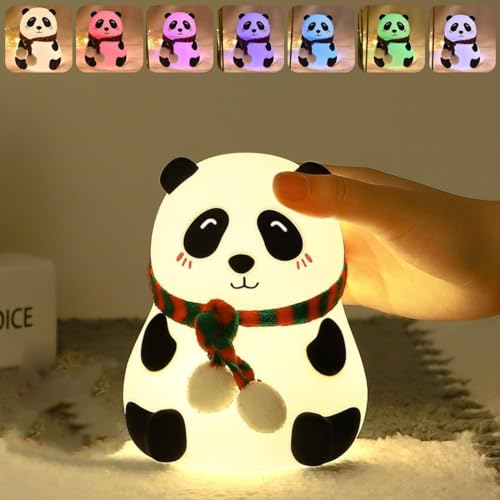
- Pakage Contain: 1 x Panda Lamp, USB Charging Cable, User manual
- 🎨 7-Color Changing LED Night Light: Enjoy warm white light, dynamic color-changing mode, and static color options with a…
- 🔋 Rechargeable & Long-Lasting: Equipped with a USB charging cable, this night lamp provides a full night of comforting l…

- Well Crafted with precision Laser cutting
- Width : 18 inches , Height : 6 inches
- Premium built quality | Made from 100% recyclable materials
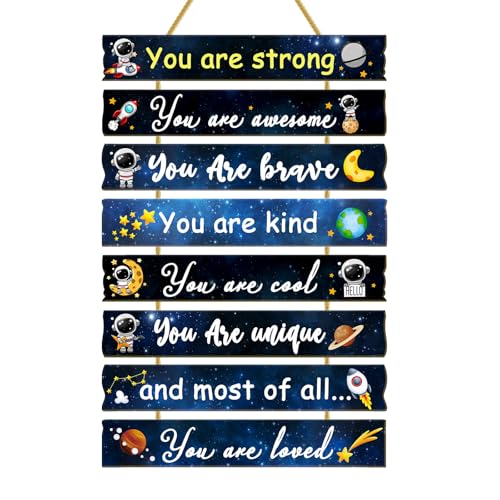
- Space Themed Bedroom Wall Decor — Our outer space wall decor prints with a variety of cute patterns and inspirational w…
- Boys Room Decor — This inspirational wall decor is composed of 8 pieces of MDF with size of 11.4″*2″ and thickness of 0…
- Why Choose Rutiyoka — Our kids bedroom wall sign made of high quality MDF, compared to plywood, our space decor made of…
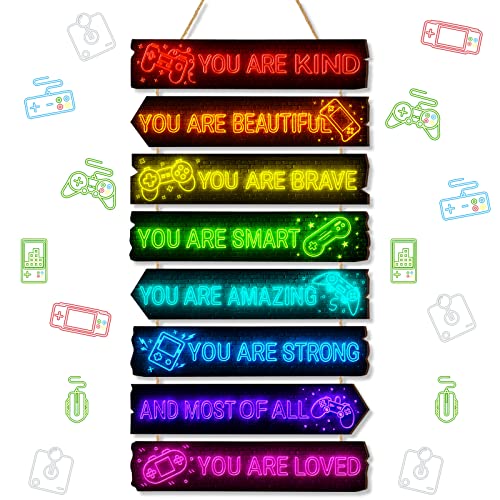
- Package includes: you will receive 1 piece of rainbow room decor, paired with 8 different colors of wooden panels with i…
- Wood material: this games nursery decor is made of wood material, reliable and strong, not easy to tear and break; Fine …
- Easy to hang: our inspirational wall art for girls comes with a rope, after receiving it, you can hang it directly witho…

- DO NOT DISTURB SIGN FOR GAMERS – Either you’re playing video games, sleeping, studying, recording, filming or attending …
- A MUST HAVE ITEM AFTER PURCHASING A NEW CONSOLE – What other thing do you need after buying a new console other than an …
- A MEMORABLE GIFT FOR ANY GAMERS – Awaken the gamer’s proud feeling!
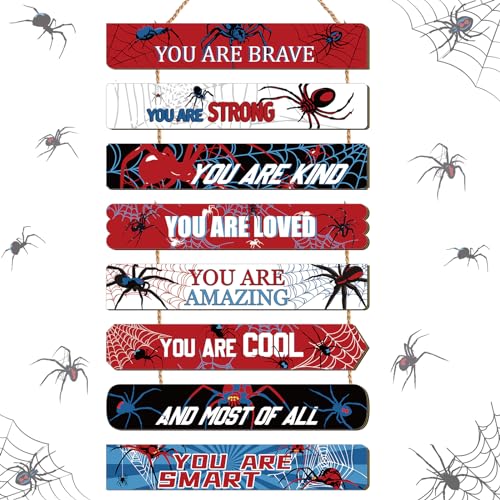
- Stylish Spider Theme: featuring a vibrant spider theme with inspirational quotes, this spider bedroom decor for boys cat…
- Impressive Size: measuring about 11.4 x 1.9 inches/ 29 x 5 cm per plank, this inspirational spider wall room decor inclu…
- Quality Material and Design: mainly crafted from wood, our hanging spider theme sign is the robust wall decor, bringing …
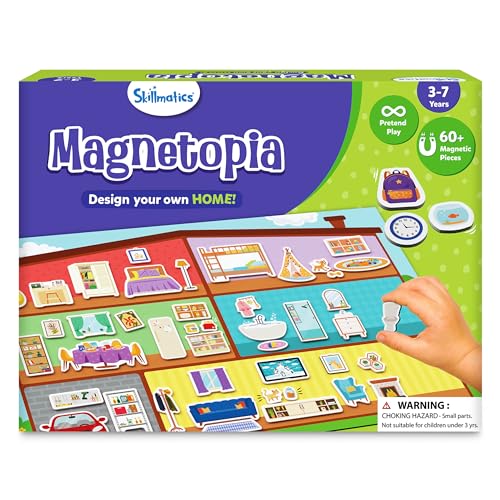
- CREATE YOUR OWN WORLD WITH MAGNETOPIA: Create your own dream house using over 60 magnetic pieces. Decorate your own livi…
- INCLUDES: 60+ Magnetic Pieces, Magnetic Board with 9 Jigsaw Pieces, and Instruction Manual
- INTERACTIVE GAMEPLAY: Start by connecting jigsaw pieces to build the magnetic board. Then, explore the magnetic pieces t…
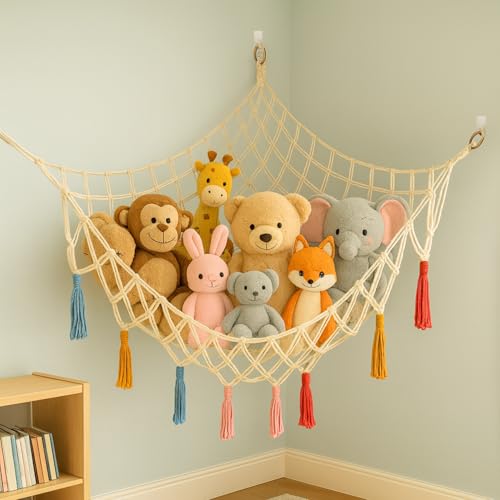
- CONVENIENT TOY STORAGE – This Cotton Toy hammock would be a great toy organizer for children’s toys, stuffed animals, pl…
- HOW GREAT ROOM DECOR – Why hide away those adorable stuffed animals when you can display them! It’s all in the details- …
- PERFECT SIZE – Our stuffed animal nets measure is 50”(L) X 45”(W), Soft toys are not included. You don’t need it too l…

- Board games are the perfect way to entertain & engage kids. These games help them to build quick decision making, strate…
- Diverse collection of board games tailored for kids & engaging themes and gameplay styles to captivate young minds.
- The 10-in-1 board game set offers a diverse collection of classic strategy and family games, including Chess, Backgammon…
FAQs
At what age is it safe for bunk beds?
Most experts recommend waiting until children are at least six years old before using the top bunk. Younger kids lack the coordination needed to climb safely. Always follow the manufacturer’s age guidelines for specific models.
How do I make bunk beds safer?
Install guardrails on all open sides, ensure the ladder is securely attached, and use night lights for visibility. Keep the top bunk clear of toys that could cause tripping. Regular checks for loose bolts prevent accidents.
Can bunk beds work in small rooms?
Absolutely! Bunk beds are ideal for tight spaces since they use vertical rather than floor space. Choose designs with built-in storage to eliminate additional furniture. Measure ceiling height before purchasing to ensure comfortable headroom.
What mattress thickness works best for bunks?
Stick with mattresses 6-8 inches thick to ensure guardrails extend properly above the sleeping surface. Thicker mattresses reduce the protective height of railings. Always check your specific bunk bed’s manufacturer recommendations first.
How do I personalize each bunk?
Give each child different colored bedding, individual reading lights, and small shelves for personal items. Clip-on nameplates or custom pillows add identity. Let each boy choose decorations for his level within agreed boundaries.
Conclusion
Choosing the right bunk bed setup transforms a boys’ bedroom from simple sleeping quarters into an adventure zone they’ll love for years.
Whether you’re working with a tiny room or designing a space for multiple brothers, these ideas prove that functionality and fun aren’t mutually exclusive.
I’ve seen firsthand how the right bed choice can turn bedtime battles into excited goodnight routines.
Remember to prioritize safety first, then let creativity guide your design decisions.
With smart planning and these practical ideas, you’ll create a space that grows with your boys, supports their interests, and makes every day feel a little more special.
Sweet dreams start with smart design choices!
No products found.